Detailing works with the paint you already have. Restoration repairs or replaces what is damaged. That single sentence covers most of the confusion between the two, but the line between them matters because it decides whether your car needs a few hours of polishing or actual bodywork. Here is how to tell.
The short answer
| Detailing | Restoration | |
|---|---|---|
| Works on | Paint that is intact but tired | Paint and panels that are damaged |
| Fixes | Swirls, light scratches, oxidation, dull finish | Dents, deep scratches, scuffed bumpers, kerbed alloys, faded or failing paint |
| Method | Decontamination, machine polishing, protection | Panel repair, filling, respraying, refurbishment |
| From | £95 | £149 |
| Rule of thumb | The paint is there, it just looks poor | The paint or panel is physically damaged |
What detailing covers, and where it stops
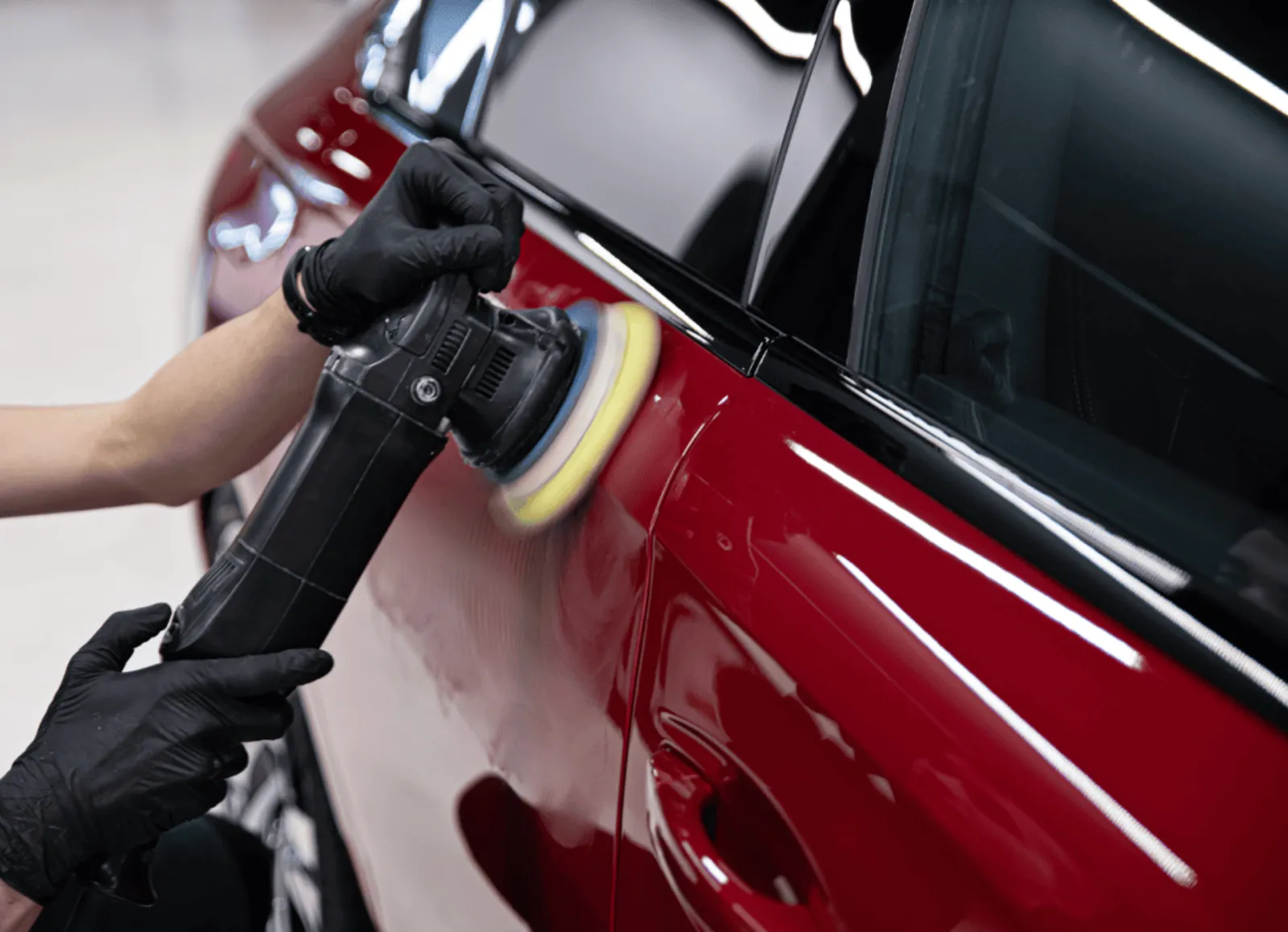
Detailing is corrective, but only within the clearcoat. Machine polishing removes an extremely thin layer of that clearcoat to level the surface, which is what makes swirl marks and light scratches disappear.
It handles:
- Swirl marks and the hazy cobweb effect you see in sunlight
- Light scratches that have not gone through the clear layer
- Oxidation and dullness on older but sound paint
- Water spotting and etching from bird lime or sap
- Protecting the result with a sealant or ceramic coating
Where it stops is the clearcoat. There is only so much of it, and once a scratch has cut through to the colour or the primer underneath, polishing cannot bring it back. Taking more clearcoat off at that point makes the situation worse, not better.
What restoration covers
Restoration is repair work. It deals with damage rather than appearance, and it puts material back rather than taking it away.
Dents and panel damage
Dent removal and paintless panel repair works the metal back into shape from behind where the paint is unbroken. Car park dings, trolley marks and minor creases usually fall into this category, and because the paint is never touched there is no respraying and no colour matching involved.
Bumper scuffs and deep scratches
Bumper scuff repair deals with the damage that polishing cannot: kerbed corners, deep gouges, scrapes down to the plastic. The area is prepared, filled where necessary, then colour matched and blended so the repair is invisible against the surrounding panel.
Alloy wheels
Alloy wheel refurbishment strips, repairs and refinishes kerbed or corroded wheels. Detailing can clean a wheel beautifully but it cannot repair a kerb strike, because there is material missing.
Bodywork and respraying
Panel respraying is the last resort, for paint that has failed, lacquer that is peeling, or damage too extensive to fill. The panel is prepared, resprayed in a matched colour and blended into the surrounding bodywork.
How to tell which one you need
There is a simple physical test for scratches. Run a fingernail gently across the mark.
- Your nail glides over it The scratch is in the clearcoat. Detailing will very likely remove it.
- Your nail catches in it It has cut through the clear layer. Polishing will improve how it looks but will not remove it, and it is a restoration job.
For everything else the question is simply whether material is missing or displaced. A dent, a scuff, a kerbed rim and flaking lacquer all involve physical damage, so they are restoration. Dullness, haze and fine scratching are appearance, so they are detailing.
Doing both, and the order that matters
Plenty of cars need a bit of each, and the sequence is not optional.
Repair first, then detail, then protect. There is no sense machine polishing a panel that is about to be resprayed, and applying a ceramic coating before repair work means paying to have it removed again. Restoration puts the car back to sound condition, detailing makes it look its best, and protection keeps it that way.
This matters most before a sale. A car with a kerbed alloy and a scuffed bumper reads as neglected regardless of how well the paint is polished, and buyers price accordingly. Fixing the damage first usually returns more than the work costs.
What each costs
Our detailing starts from £95 for individual services, with full paint correction priced on the size and condition of the car. Restoration work starts from £149, and because every repair is different it is always quoted from photographs rather than a fixed price list.
That is not evasiveness. A scuffed bumper corner and a creased door are both "restoration" and they are not remotely the same job, so a single headline price would be misleading either way.
Frequently asked questions
What is the difference between car restoration and detailing?
Detailing works with paint that is intact but looks tired, using machine polishing and protection to remove swirls and restore gloss. Restoration repairs physical damage such as dents, deep scratches, scuffed bumpers and kerbed alloy wheels. Detailing improves appearance, restoration repairs damage.
How do I know if a scratch can be polished out?
Run a fingernail gently across it. If your nail glides over the scratch it is within the clearcoat and detailing will usually remove it. If your nail catches, the scratch has gone through the clear layer and needs restoration work rather than polishing.
Should restoration or detailing come first?
Restoration first, always. Repair any damage, then detail the paint, then apply protection. Polishing or coating a panel that is about to be repaired or resprayed simply wastes the work.
Is car restoration worth it before selling?
Usually yes for visible damage. Kerbed alloys and scuffed bumpers stand out immediately during a viewing and buyers tend to deduct far more than the repair costs. Fixing the obvious damage generally returns more than it costs.
Can restoration work be done at my home?
Much of it can. Dent removal, bumper scuff repair and alloy refurbishment are all carried out mobile at your address across West London. Full panel respraying needs controlled conditions, so we will advise if a job falls into that category.