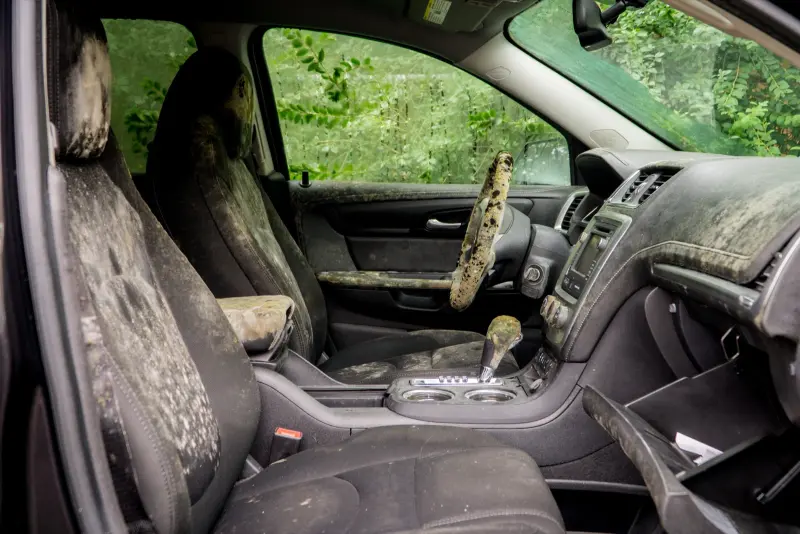
That musty, damp smell the moment you open the door. A patch of green or white fuzz creeping across a seat or seatbelt. Windows that fog up and never quite clear. Mould in a car isn't just unpleasant — it can trigger allergies and asthma, it spreads fast in a warm cabin, and it quietly knocks hundreds off your car's resale value. The good news: caught early, you can often deal with it yourself. Here's how — the eco-friendly way — plus how to make sure it stays gone.
What causes mould and that damp smell in a car?
Mould needs one thing to thrive: trapped moisture. In a car, that usually comes from:
- Water getting in — a perished door or windscreen seal, a blocked sunroof drain, or a boot seal letting rain seep into the carpet underlay.
- Wet items left inside — gym kit, umbrellas, dog towels, wet shoes or a child's coat drying on the back seat.
- Spills that soaked in — a knocked-over coffee, milk, or a leaky water bottle that reached the foam beneath the carpet.
- Condensation — warm, damp breath meeting a cold cabin, especially in a car that's parked up and not driven often.
Because the moisture is often underneath the carpet or deep in the seat foam, wiping the surface rarely fixes it — the mould simply grows back.
Is car mould actually a problem?
It's more than a cosmetic issue:
- Your health — spores circulate through the cabin every time you use the fans, and can trigger allergies, coughing and asthma, especially for children.
- It spreads — a warm, closed car is the perfect greenhouse. A small patch can cover seats, carpets and the headlining within weeks.
- Resale value — buyers walk away from a car that smells damp, and a valuer will mark it down. Sorting it early protects what your car is worth.
How to get rid of mould in your car (step by step)
Pick a warm, dry day, park in the sun with the doors open, and wear a mask and gloves — you don't want to be breathing in spores.
1. Find and fix the moisture source first
This is the step most people skip — and it's exactly why the mould comes back. Press the carpets and footwells with your hand: if they're damp, track down where the water is getting in (door and window seals, sunroof drains, the boot seal) before you clean. If the carpet is soaked, lift it and dry the underlay too.
2. Vacuum thoroughly
Use a vacuum — ideally one with a HEPA filter, so you're capturing spores rather than blowing them around — and go over every seat, carpet, mat and the boot. Get into the seams and under the seats, where debris and damp collect.
3. Treat the mould (skip the bleach)
You don't need harsh chemicals. A simple white-vinegar solution (roughly one part vinegar to two parts water in a spray bottle) kills most mould and is safe on fabric — unlike bleach, which can ruin the colour of your trim and carpets. Spray the affected areas, leave it for 10–15 minutes to break down the spores, agitate gently with a soft brush, then blot with a clean microfibre cloth. For leather, use a dedicated leather-safe cleaner rather than vinegar.
4. Dry it out — completely
Mould only returns if moisture stays behind. Leave the doors open in the sun, run a fan or a small dehumidifier in the cabin, and don't close the car up until everything is bone dry. Damp left in the foam is the number-one reason a "cleaned" car smells musty again a week later.
5. Kill the smell — don't just mask it
An air freshener only hides a damp smell for a day. To actually remove it, leave an open tub of baking soda in the car overnight to absorb odours, then vacuum it up. For stubborn smells that have worked into the seat foam and the air-con system, a professional steam or ozone treatment is usually what finally clears them — more on that below.
How to stop mould coming back
- Never leave wet clothes, towels or umbrellas in the car — take them inside to dry.
- Use rubber or waterproof floor mats to catch spills and melting snow.
- Crack the windows for a few minutes on dry days to let moisture escape.
- Fix any leak the moment you notice a damp footwell — don't wait for it to spread.
- If the car sits unused for long spells, pop a moisture-absorbing bag on the dashboard.
When to call in a professional
DIY works well for a small, fresh patch. But it's worth bringing in a pro when:
- The mould keeps coming back no matter how often you clean it.
- It has spread across the seats, carpets or headlining.
- There's a stubborn damp smell you just can't shift.
- You can't work out where the water is getting in.
At Ecoverde, our mobile mould & odour removal service tackles it at the source: we diagnose where the damp is coming from, kill the spores with eco-friendly anti-fungal treatment and high-temperature steam, then use enzyme neutralisers and ozone to eliminate the smell for good — not mask it. It's part of our wider interior deep clean & steam service, and because we're fully mobile, we come to you anywhere in West London.
Dealing with a mouldy or musty car? Send us a couple of photos for a free, no-obligation assessment and we'll tell you exactly what it needs.