The two words get used as if they mean the same thing, and they really don't. Booking a valet when you needed detailing means paying for a clean that won't touch the problem. Booking detailing when a valet would have done means paying two or three times more than you needed to. Here is the actual difference, in plain terms.
The short answer
| Valeting | Detailing | |
|---|---|---|
| What it does | Cleans the car, inside and out | Corrects and protects the paintwork |
| Focus | Dirt, dust, stains, smells | Swirl marks, scratches, oxidation, gloss |
| Takes | 1 to 4 hours | Most of a day, sometimes longer |
| From | £109 | £95 for single services, more for full paint work |
| Best for | Regular upkeep, tidying before a sale, family cars | Restoring gloss, removing swirls, long-term protection |
The simplest way to hold it in your head: a valet cleans what is on the paint. Detailing works on the paint itself.
What a valet actually is
Valeting is thorough cleaning. A full valet covers the outside and the inside properly, rather than the quick pass you get at a roadside wash.
Typically that means:
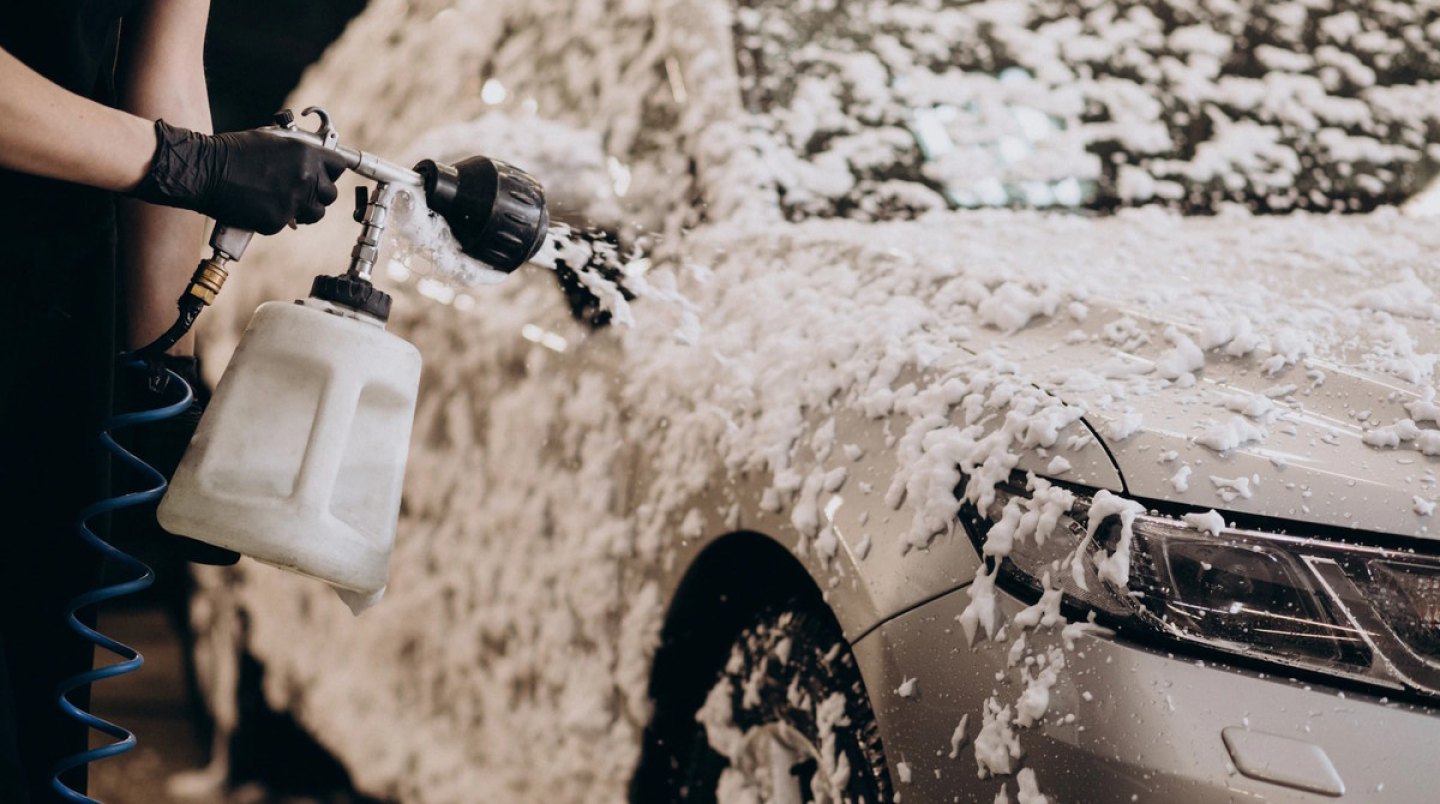
- A proper pre-wash and contact wash, wheels and arches included
- Interior vacuum, including the boot and under the seats
- Hard surfaces cleaned, not just wiped over
- Glass cleaned inside and out
- Often a wax or sealant at the end for a few weeks of protection
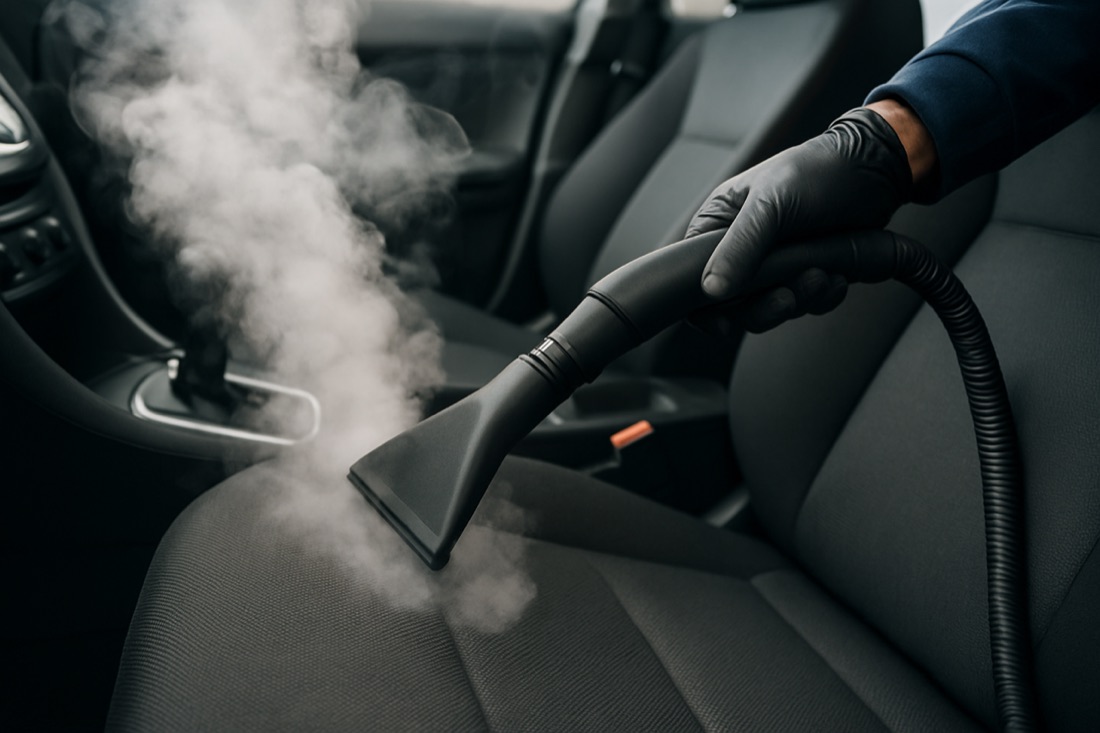
Valeting comes in tiers. A mini valet is a lighter version, a full valet is the complete inside and out job, and an interior deep clean goes further again with steam into the vents, seat rails and crevices.
What a valet will not do is remove a scratch, take out swirl marks, or bring back paint that has gone dull and chalky. It cleans the surface beautifully. It does not repair it.
What detailing actually is
Detailing starts where cleaning stops. The car gets washed first, but that is preparation rather than the job itself. The work is on the condition of the paint.
A detail usually involves:
- Decontamination, chemically dissolving embedded iron and tar that washing cannot shift
- Clay treatment, pulling bonded contamination out until the paint feels like glass
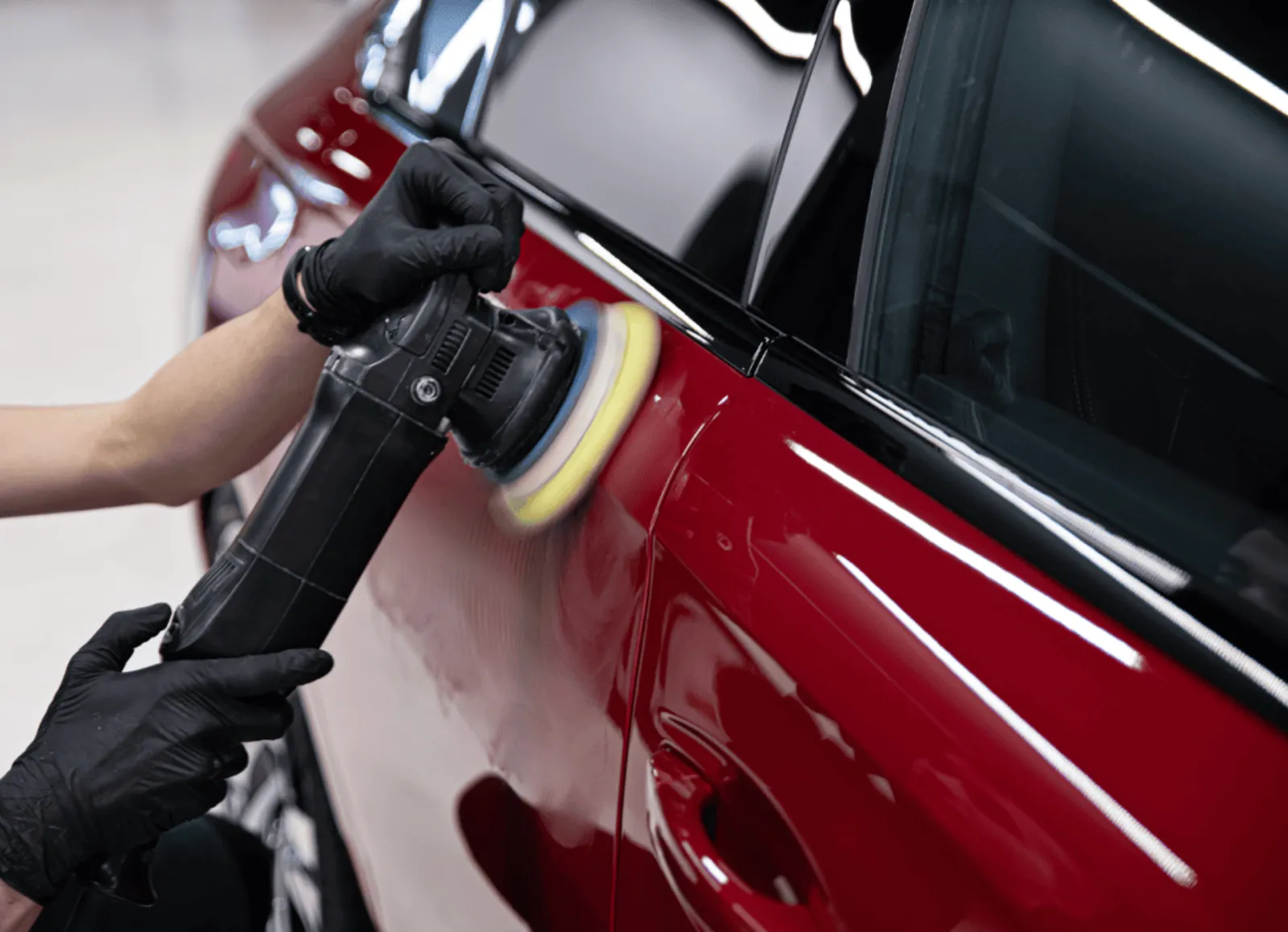
- Machine polishing, removing a microscopic layer of clearcoat to level out swirls and light scratches
- Protection, a sealant or a ceramic coating to lock the finish in
That machine polishing stage is the real dividing line. It is skilled work, it takes hours, and it is why detailing costs what it does. Done well, a car that looked tired and flat comes back looking genuinely deep and reflective, particularly in darker colours.
The real difference, in one test
Stand next to your car in direct sunlight and look along the panel rather than straight at it.
If the paint looks clean but you can see fine circular scratches, a hazy cobweb effect in the light, that is swirl marking. No amount of washing will remove it. That is a detailing job.
If the paint looks dull because it is dirty, and the shine returns when it is wet, it is just dirty. That is a valeting job, and detailing would be money spent on a problem you do not have.
What each costs
Our valeting starts from £109 for a mini valet and £189 for a full valet. Detailing services start from £95 for individual work such as leather treatment, rising for full paint correction and coating depending on the size of the car and the state of the paint.
The reason detailing costs more is hours, not products. Correcting paint on a normal-sized car is most of a day of skilled work, and it cannot be rushed without risking the clearcoat. There is a fuller breakdown in our car valeting cost guide.
Which one do you need?
- "It just needs a good clean" Valet. Most cars, most of the time.
- "There is a smell I cannot get rid of" Interior deep clean, which is valeting rather than detailing.
- "It looks flat and scratched even when clean" Detailing. Cleaning will not fix it.
- "I am selling it" Usually a full valet. A tidy interior sells a car. Consider detailing only if the paint is genuinely poor.
- "I have just bought it and want to protect it" Detailing, with a coating while the paint is still near perfect.
- "It is a dark car and shows everything" Detailing, then keep it up with regular valets.
Can you have both?
Yes, and for most people that is the sensible pattern. Detail the car once to get the paint into good condition and protected, then keep it there with regular valeting. Protection applied over neglected paint just locks the problems in, which is why the order matters.
If you are not sure which camp your car falls into, send us a few photos in daylight and we will tell you honestly. We would rather book you a valet you actually need than sell you a detail you do not.
Frequently asked questions
What is the difference between car valeting and detailing?
Valeting is thorough cleaning of the car inside and out. Detailing goes further and works on the paintwork itself, using decontamination, machine polishing and protective coatings to remove swirl marks and restore gloss. A valet cleans what sits on the paint. Detailing corrects the paint.
Do I need valeting or detailing?
If the car is simply dirty, you need a valet. If the paint looks dull, hazy or covered in fine circular scratches even after washing, you need detailing. Look along the panel in sunlight rather than straight at it, as swirl marks only show at an angle.
Is detailing more expensive than valeting?
Yes. Valeting starts from £109 and detailing from £95 for individual services, with full paint correction costing considerably more. The difference is labour rather than materials, because correcting paint properly takes most of a day.
Will a valet remove scratches?
No. Valeting cleans the surface but does not alter the paint, so scratches and swirl marks remain. Removing them requires machine polishing, which is a detailing service.
How often should I have each done?
Most drivers benefit from valeting every four to eight weeks depending on where the car is parked and how it is used. Detailing is far less frequent, typically once when you get the car and then every few years, with regular valeting maintaining it in between.