Road salt is one of the most damaging things your car meets all year. Mixed with rain and road spray, it clings to the lower panels, wheels and underbody, where it speeds up rust and dulls the paint. Washing it off regularly and safely, and protecting the paint before the gritters come out, makes a real difference to how your car looks by spring.
Why road salt is so hard on a car
When frost or ice is forecast, councils and TfL grit the main routes across London with rock salt. It does its job on the road, but every car that drives through it picks up a fine, salty spray. That film settles on the sills, the lower doors, the wheel arches and everything underneath.
Salt causes trouble in two ways. First, it holds moisture against the metal, which speeds up corrosion on any stone chip, scratch or exposed edge. Second, once it dries it leaves a gritty crust. Wipe that off with a dry cloth or a dirty sponge and you are effectively rubbing fine sandpaper across the paint.
Where salt does the most damage
- Sills and lower doors: they take most of the spray thrown up by the wheels in front.
- Wheel arches and the underbody: out of sight, so salt builds up for weeks without anyone noticing.
- Alloy wheels: salt and brake dust together attack the lacquer and lead to corrosion around the rim.
- Brake discs and calipers: salt speeds up surface rust, especially on cars that sit for a few days.
- Door shuts and boot seals: salty water collects there and is easy to miss.
How to wash salt off without scratching the paint
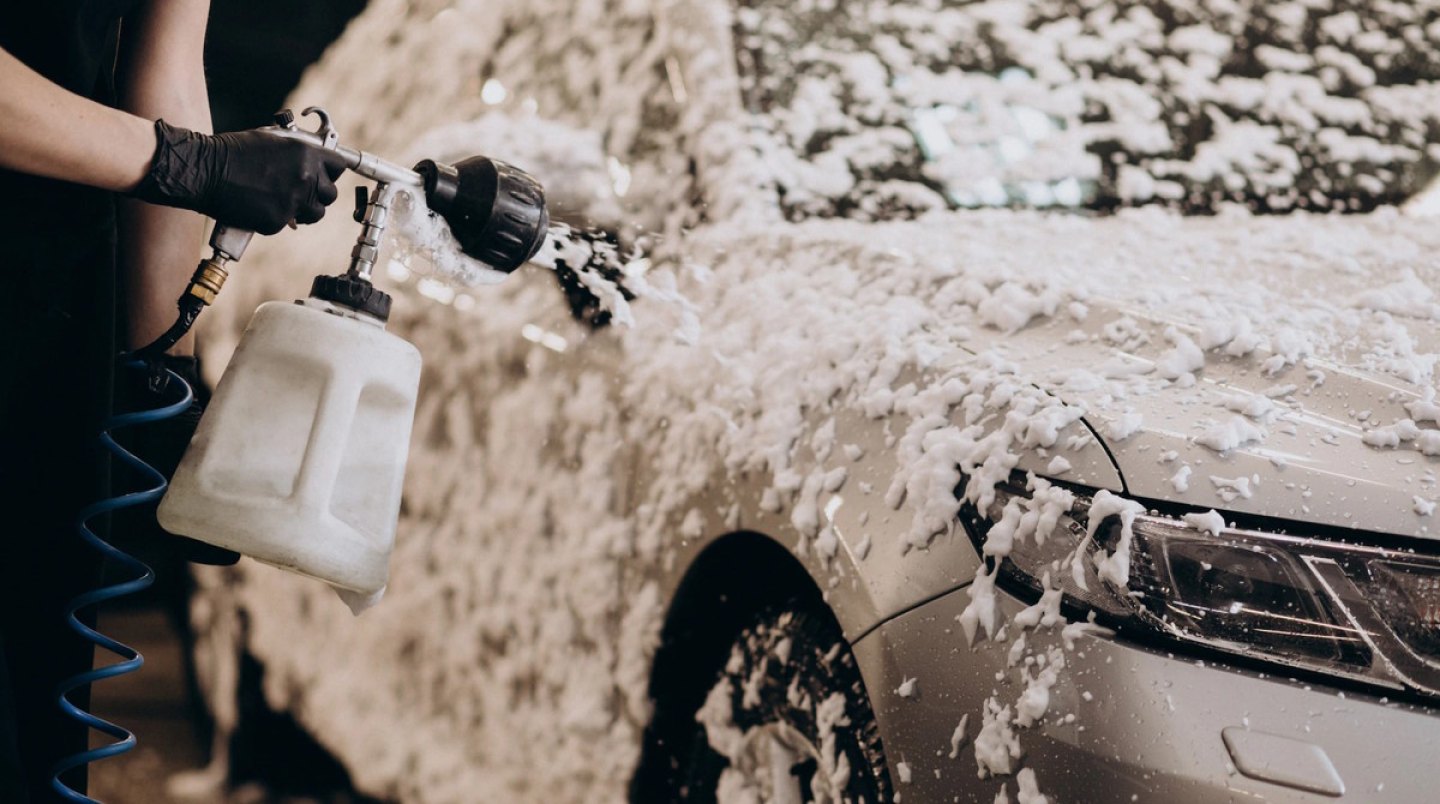
- Pre-wash first. Soften and lift the salt and grit before anything touches the paint. We use a snow foam pre-wash for exactly this reason.
- Work from the top down, but give the lower third extra attention. That is where most of the salt sits.
- Use two buckets and a clean wash mitt. One bucket for shampoo, one for rinsing the mitt, so the grit does not go back onto the car.
- Clean the wheels with a pH-balanced wheel cleaner. Harsh acidic products can damage the lacquer and are not needed.
- Rinse the arches and sills thoroughly, and open the doors to clean the shuts.
- Dry with a clean microfibre towel, including the rubber seals, so the doors do not freeze shut overnight.
Avoid washing when the temperature is below freezing, as water can freeze on the glass, seals and locks. A mild, dry afternoon is ideal.
How often to wash in winter
While the roads are being gritted, every one to two weeks is a sensible rhythm for a car used daily. After a long run on heavily salted roads, wash the car as soon as you reasonably can rather than leaving the salt to sit. Our guide to how often you should wash your car covers the year-round picture.
Protect the paint before the worst of winter
A layer of protection on top of the paint stops salt and grime bonding to it, so they come off far more easily. A traditional wax lasts a few weeks in winter conditions, and a synthetic sealant lasts longer. A ceramic coating lasts the longest and gives the slickest finish, so a quick wash removes most of the winter film. Our comparison of wax, sealant and ceramic coating explains the trade-offs.
Whatever you choose, it needs to go onto clean, decontaminated paint. Sealing salt and fallout under a coating defeats the point, which is why we wash and prepare the paint properly first.
Do not forget the inside
Winter salt also comes in on your shoes. It leaves white tide marks on carpets and mats, and the damp it carries is a common cause of misted windows and musty smells. Rubber mats help, and an interior deep clean with steam lifts the marks and dries the carpets out properly.
Let us take care of it this winter
A regular mobile car wash or full valet through the winter stops salt building up, and we come to your home or office with our own water and power. We cover West London from our Brentford and Ladbroke Grove teams. Send us a photo for a free quote, or call 07495 400369.
Frequently asked questions
How often should I wash my car in winter?
Every one to two weeks while the roads are being gritted is a good rhythm for a car used daily. After a long drive on heavily salted roads, wash it as soon as you can.
Is it safe to wash a car when it is cold?
Yes, as long as it is above freezing. Dry the door seals, locks and glass afterwards so nothing freezes overnight, and avoid washing on frosty mornings.
Does ceramic coating protect against road salt?
It does not make paint salt-proof, but it creates a slick barrier that stops salt and grime bonding to the surface, so they rinse off far more easily. You still need to wash the car regularly.
How do I get salt marks out of my car carpets?
Let the carpets dry, vacuum out the loose salt, then lift the marks with warm water and a fabric cleaner or a steam clean. Stubborn tide marks usually come out during an interior deep clean.