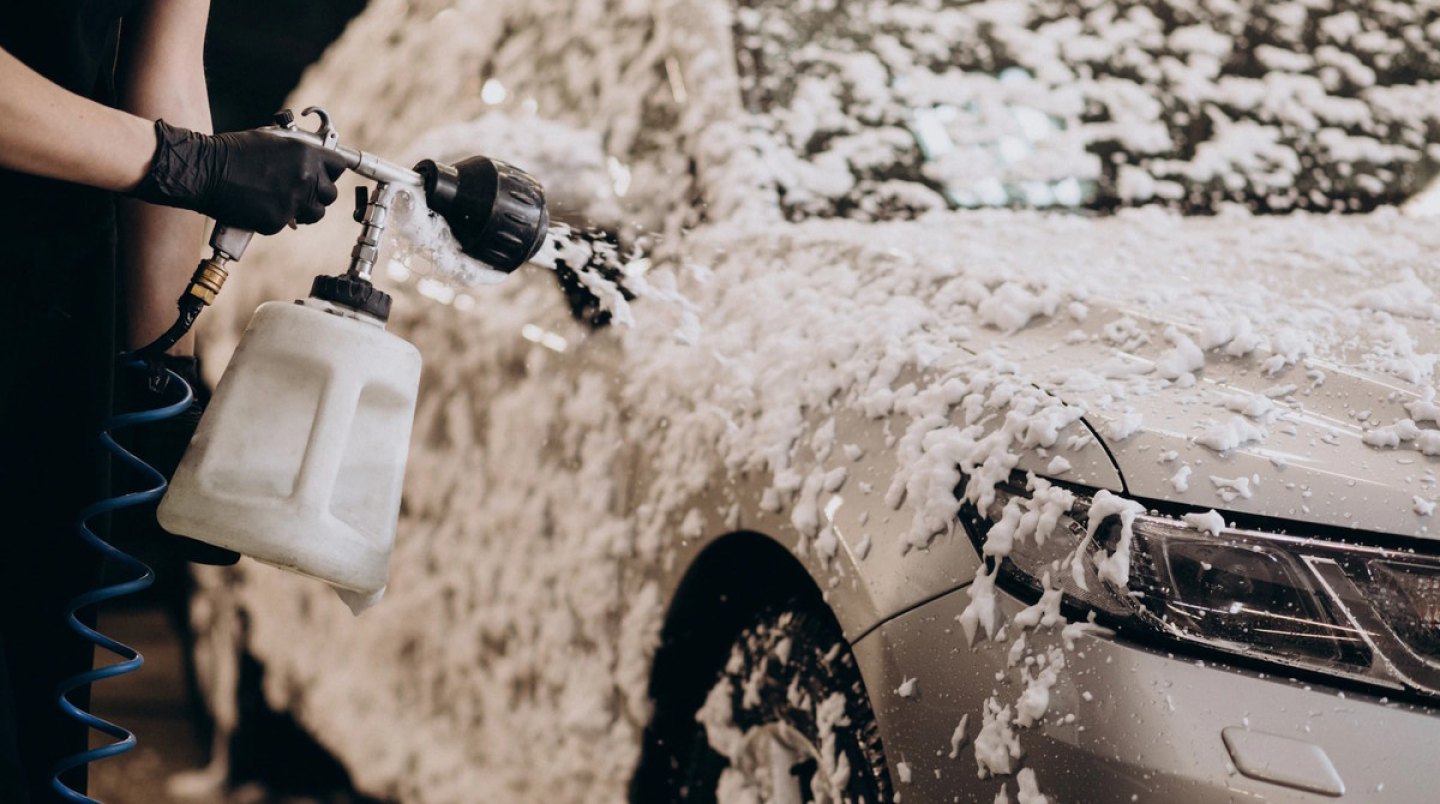
Winter leaves cars carrying road salt, grit, and general grime that accelerates corrosion and dulls paint if it isn't properly removed. A spring check should cover a full decontamination wash, an undercarriage rinse, and a proper look at the paint and interior condition, so any damage from the colder months gets caught and dealt with before it gets worse through spring and summer.
Winter is genuinely hard on cars — road salt, grit, near-constant damp, and less frequent washing (understandably, given the weather) all add up. Spring is the natural point to properly reset, checking for anything that's built up unnoticed and making sure the car's in good shape for the months ahead.
Why Winter Grime Is Worse Than It Looks
Road salt is the main culprit. It's corrosive, and it doesn't just sit on the surface — it works into seams, wheel arches, and the underside of the car, where it can sit for months if it's not properly rinsed away. Combined with grit and general road grime, winter driving leaves a layer of contamination that a quick rinse rarely fully removes.
Areas Most Owners Miss
A standard wash covers the visible bodywork, but a few areas tend to get overlooked:
- Wheel arches — a common spot for salt and grit to accumulate and sit against metal
- Undercarriage — largely out of sight, but exactly where road salt causes the most long-term corrosion risk
- Door shuts and boot shuts — grime builds up in these recesses and is easy to miss on a quick exterior wash
- Door seals and rubber trim — salt residue here can cause the rubber to perish faster than it should
A Simple Spring Checklist
- 1. Full decontamination wash — a proper hand wash covering the whole car, not just a quick rinse
- 2. Wheel arch and undercarriage rinse — specifically targeting where salt and grit accumulate
- 3. Door shuts and boot shut clean — often missed, but worth doing properly at least once a season
- 4. Paint inspection in good light — check for any dullness, light scratching, or contamination that's built up over winter
- 5. Interior check — footwell mats and carpets pick up a lot of grit and damp over winter; a proper vacuum and check for any dampness is worth doing
- 6. Wax or sealant top-up — winter wears down protective coatings faster than other seasons, so this is a good point to reapply
Is This the Right Time for Paint Correction or a Coating Refresh?
Spring is a sensible time to consider paint correction if winter's left visible swirling or dullness, since it sets the car up properly for the months when it'll be washed and used more often. If your car has a ceramic coating, this is also a good point to check its condition — coatings can be affected by a hard winter, and topping up protection now means better performance through spring and summer.
Setting Your Car Up for the Rest of the Year
Once the winter build-up is properly dealt with, keeping on top of regular washing through spring and summer is a lot easier than trying to catch up after another few months of neglect. A car that's been properly reset in spring tends to hold its condition much better right through to the next winter.
A Final Thought
Spring is really about catching anything winter's caused before it becomes a bigger problem — corrosion in particular doesn't announce itself until it's already progressed. A proper decontamination wash and inspection now is a small job compared to dealing with rust or badly deteriorated paint later.
If your car hasn't had a proper wash in a while, get in touch — we'll give it the reset it needs.
Internal link opportunity: link "paint correction" to your machine polishing / paint correction page, and "ceramic coating" to your ceramic coating page.
Frequently asked questions
Why is spring a good time for a proper car clean?
Winter road salt, grit, and grime build up in ways that accelerate corrosion if not properly removed, making spring a natural point to catch and address it.
What areas get missed most often in a normal winter wash?
Wheel arches, the undercarriage, and door or boot shuts are commonly missed areas where salt and grit accumulate.
Should I reapply wax or sealant in spring?
Yes, winter tends to wear down protective coatings faster than other seasons, so spring is a sensible time to top them up.
Is spring a good time for paint correction?
Yes, if winter has left visible swirling or dullness, correcting it in spring sets the car up well for the months ahead.
How often should the undercarriage be rinsed in winter?
More frequently than other seasons, given how corrosive road salt is if left to sit against metal components.