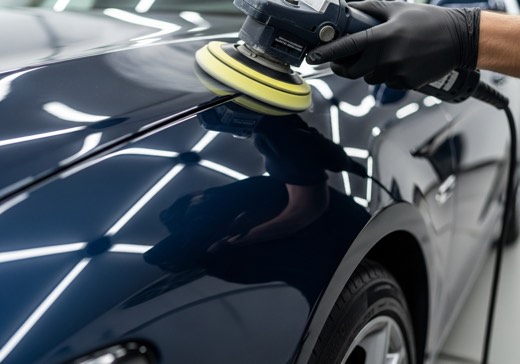
Machine polishing uses a rotating or dual-action polisher with an abrasive compound to level out the clear coat on your car's paint, removing fine scratches, swirl marks, and light oxidation. People often use "compounding" and "polishing" to mean the same thing, but they're not quite the same job — a compound is more aggressive and cuts deeper for heavier defects, while a finishing polish refines the surface afterwards to bring out maximum gloss. Most proper paint correction jobs use both, one after the other, rather than picking just one.
We get asked some version of this question most weeks: "will a polish sort out these scratches?" It's a fair question, because the terms get thrown around loosely — polishing, compounding, buffing, correction — and they're often used as if they all mean the same thing. They don't, and knowing the difference actually matters if you want the right result without paying for more work than your car needs.
This isn't a sales pitch for polishing everything. Some cars need it, some don't, and understanding what the process actually does helps you have a proper conversation with whoever's working on your car, mobile or otherwise.
What's Actually Happening to Your Paint
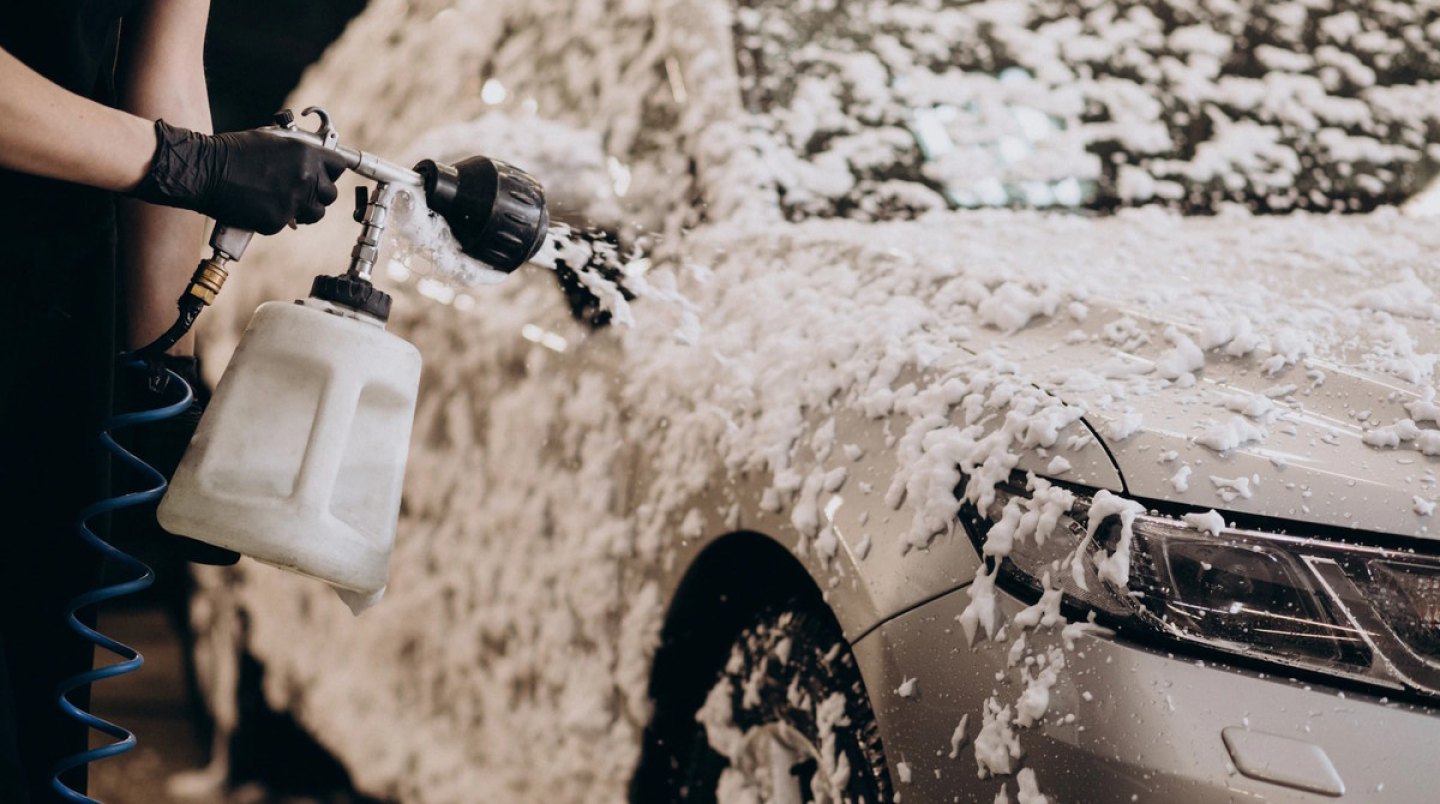
Your car's colour sits underneath a clear lacquer layer — the clear coat. That layer is what gives paint its depth and shine, and it's also what takes the damage from everyday life: automatic car washes, dirty wash mitts, dust being wiped rather than rinsed off, even normal parking and use.
Over time, that builds up as thousands of tiny scratches in the clear coat. In good light, especially direct sun, they show up as a hazy, swirled pattern rather than a clean reflection. That's what people usually mean when they say paint looks "tired" even though the car's clean.
Machine polishing works by removing a microscopically thin layer of that damaged clear coat, levelling the surface so the scratches are gone rather than just filled in or hidden. That's the key difference from something like a wax or sealant, which sits on top and can mask light imperfections temporarily but doesn't actually remove them.
Compound vs Polish: The Real Difference
This is where most of the confusion comes from, so here's the plain version.
| Compound | Polish | |
|---|---|---|
| Abrasiveness | More aggressive, larger abrasive particles | Finer abrasive, less aggressive |
| Job | Cuts deeper to remove heavier defects | Refines and finishes the surface |
| Used for | Deep swirl marks, oxidation, noticeable scratching | Restoring gloss and clarity after compounding, or light refresh work |
| Used alone? | Rarely — usually followed by a polish | Yes, on cars that only need a light refresh |
Think of it like sanding and finishing wood. A compound is the coarser sanding step that removes the real damage. A polish is the finer step that brings out the shine once the surface is level. On a car that's in decent condition already, a single polishing stage might be all that's needed. On a car with heavier swirling, skipping straight to polish without compounding first usually won't shift the defects — it'll just make them glossier.
Why Hand Polishing Doesn't Get the Same Result
It's a common question — can't you just do this by hand? Technically you can apply polish by hand, but it won't achieve the same correction as a machine, for a simple reason: a machine polisher generates consistent speed, pressure, and rotation across the whole panel, which is what actually does the levelling work. Hand application relies on your arm, which can't replicate that consistency, so it tends to add a bit of surface gloss without actually removing the underlying scratches.
This is also why machine polishing needs to be done carefully and correctly — too much pressure, the wrong pad, or working too long in one spot can generate heat and damage the clear coat. It's a technical process, not just "buffing it with a machine instead of a cloth."
What It Can Fix (And What It Can't)
Machine polishing is genuinely effective on:
- Swirl marks and fine scratching from washing
- Light oxidation and dullness
- General haziness that makes paint look tired even when clean
- Restoring gloss before applying a wax, sealant, or ceramic coating
It won't fix:
- Deep scratches that have gone through the clear coat into the colour coat or primer
- Stone chips
- Dents or bodywork damage
- Paint that's been damaged by something corrosive (bird droppings or tree sap left too long can etch into the clear coat rather than just sitting on the surface)
If a scratch catches your fingernail when you run it across, that's usually beyond what polishing alone can correct — it's worth mentioning this to whoever's assessing the car so you're not expecting a result that isn't realistic.
Image placement idea: Close-up, well-lit photo of a machine polisher mid-pass on a bonnet, pad visible against the paint. Alt text: "Machine polishing in progress on a car bonnet."
How to Tell If Your Car Needs a Light Polish or Full Correction
A rough way to judge it before booking anyone:
- Stand the car in direct sunlight and look at the paint from a low angle, not straight on. Swirl marks show up clearly this way and are almost invisible under normal indoor or overcast light.
- Light haze, minor swirling, overall dullness — usually a single-stage polish will bring this back.
- Noticeable scratching, patchy dullness, or a car that hasn't been corrected in years — likely needs a compound stage first, then a finishing polish.
- Deep scratches you can feel — polishing won't remove these; that's a conversation about touch-up paint or bodywork instead.
If you're not sure, the simplest option is to send a few photos in good daylight to a detailer and ask directly. A straightforward answer about what your car actually needs, rather than an automatic upsell to the most expensive package, is a decent sign you're dealing with someone honest.
A Final Thought
Machine polishing is one of the more technical parts of detailing, and it's easy for the terminology to get muddled when every company describes it slightly differently. The short version: compounding removes the real defects, polishing finishes the surface and brings back the gloss, and most proper correction work uses both in sequence, not as interchangeable terms for the same thing.
If you're planning on a ceramic coating down the line, this stage matters even more — a coating locks in whatever condition the paint is in underneath it, so getting the correction right first is worth the extra time.
If you'd like an honest opinion on what your car actually needs, send us a few photos in good light and we'll tell you straight — whether that's a light polish, full correction, or nothing at all.
Internal link opportunity: link "ceramic coating" to your ceramic coating page, and the closing line to your contact/booking page.
Frequently asked questions
What's the difference between machine polishing and compounding?
Compounding is a more aggressive process that removes deeper paint defects, while polishing is a finer finishing step that restores gloss and clarity. Most paint correction work uses both, one after the other, rather than either one on its own.
Will machine polishing remove deep scratches?
No. Machine polishing removes fine scratches, swirl marks, and light oxidation from the clear coat. Deep scratches that have gone through the clear coat into the colour coat or primer need touch-up paint or bodywork, not polishing.
Is machine polishing safe for my car's paint?
Done correctly, yes — it removes a microscopically thin layer of clear coat to level out defects. It should always be carried out carefully, with the right pad, compound, and technique, as excessive polishing over time can thin the clear coat.
Can I polish my car by hand instead of using a machine?
You can apply polish by hand, but it won't achieve the same correction as a machine. A machine polisher provides consistent speed and pressure across the panel, which is what actually levels out the clear coat and removes scratches.
How do I know if my car needs a light polish or full paint correction?
Check the paint in direct sunlight from a low angle. Light haze or minor swirling usually needs only a single-stage polish. Noticeable scratching or a car that hasn't been corrected in years likely needs a compound stage first, followed by a finishing polish.
Should I get my car polished before applying a ceramic coating?
Yes. A ceramic coating locks in whatever condition the paint is in underneath it, so any swirl marks or defects should be corrected with polishing before the coating is applied.
How often should a car be machine polished?
This depends on the car's condition and how it's washed and maintained day to day. Because polishing removes a small amount of clear coat each time, it should be done as needed rather than on a fixed schedule — a detailer can advise based on the current paint condition.