"Eco-friendly" means nothing on its own. There's no certification body for car valeting, no standard to meet and nobody checking. Any operator can put a green leaf on a van and call themselves eco. Some genuinely are. Plenty aren't. Here's how to tell the difference in about two minutes of asking — and why it matters more than most drivers realise.
Why it's not just marketing
A traditional jet-wash uses somewhere between 100 and 300 litres of water on a single car. That water doesn't disappear — it runs off carrying road grime, brake dust, oil and detergent, and on most streets it goes straight down a surface drain.
Here's the part people don't know: surface drains generally don't go to a treatment works. They discharge to rivers and streams. Putting contaminated water down one is a genuine pollution offence, not a technicality. So "eco" isn't only about being nice to the planet — it's about whether the person cleaning your car outside your house is doing something they shouldn't be.
The 7 checks
1. Ask how much water they use per car
A real answer sounds specific. A steam or low-water system uses somewhere in the region of a few litres, not a few hundred. If you get a vague "oh, not much", that's not an answer. This single question separates most of the field.
2. Ask what happens to the run-off
The best answer is that there's barely any, because barely any water was used. Failing that, ask whether they contain and collect it. If a company has never thought about where the dirty water goes, the eco claim is decoration.
3. Check the products are actually biodegradable
Look for pH-neutral and biodegradable, and be aware those aren't the same thing. pH-neutral protects your paintwork and any wax or coating already on it. Biodegradable is about what happens to the chemical afterwards. You want both. A strong acidic wheel cleaner will strip protection and damage some finishes, whatever the bottle says about being green.
4. Look at the van
Not decisive on its own, but telling. A company that has invested in an electric van has made a real, expensive commitment rather than a marketing decision — especially in London, where a valeter can cover a lot of miles in a week. Ours is fully electric.
5. Ask about steam
Steam does a lot of the heavy lifting in genuinely low-water cleaning. It sanitises interiors, lifts grime from vents and crevices and kills bacteria and odour-causing spores — all with a tiny fraction of the water and far less chemical. We've written about why steam cleaning is replacing chemical car cleaning in more detail.
6. Ask about the cloths and kit
A small one that reveals a lot. Reusable, washed microfibre — sorted into separate sets for paint, glass, wheels and interior — points to a proper process. Cheap disposable cloths and one bucket for everything point to the opposite, and cross-contamination between wheels and paint is exactly how swirl marks happen.
7. Ask for specifics, not slogans
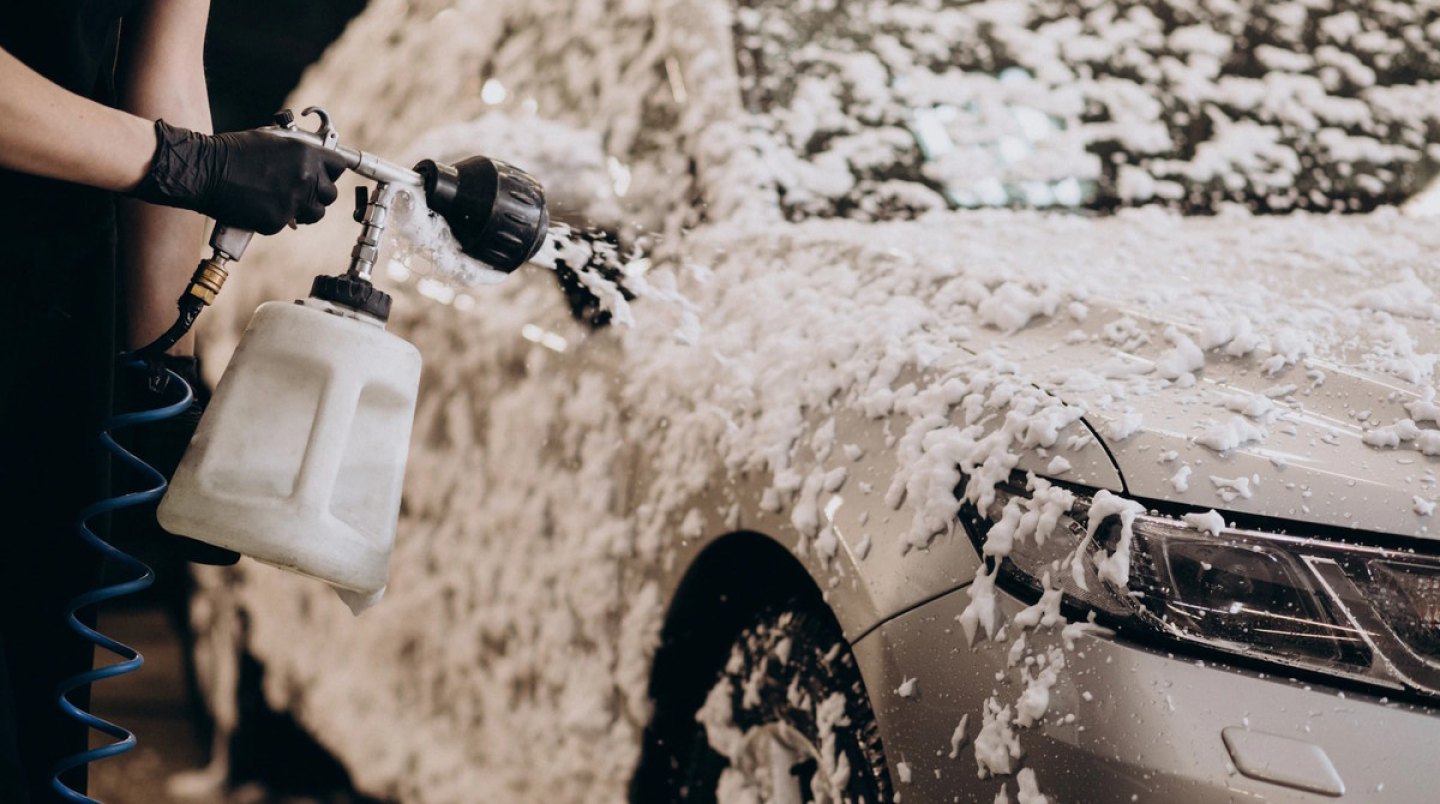
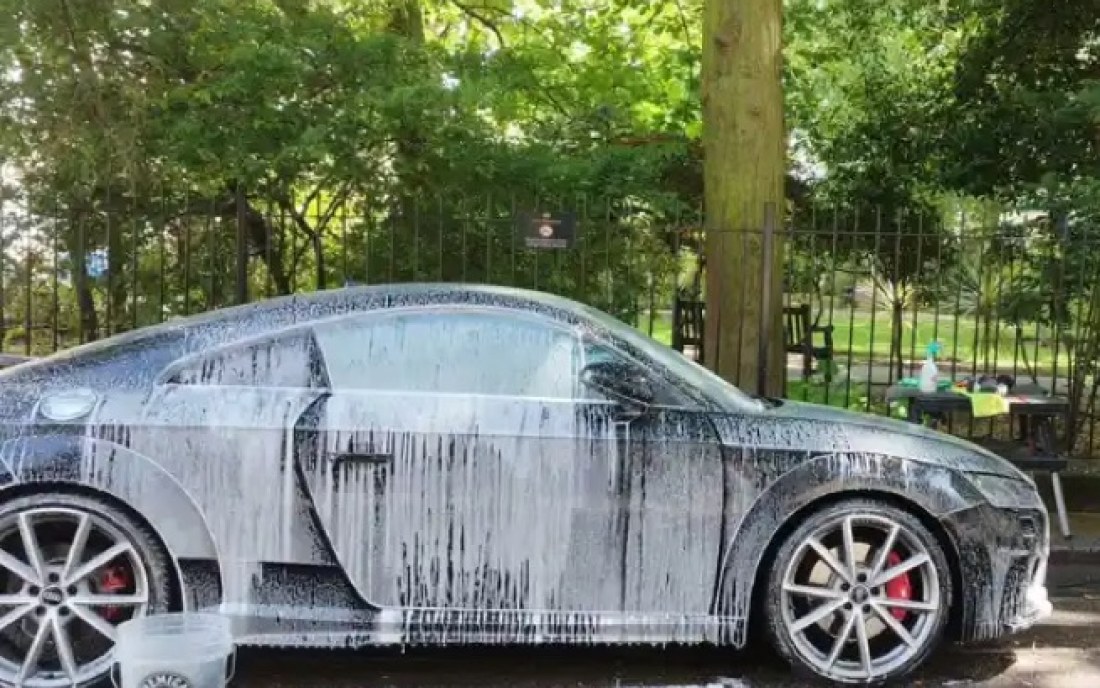
"We use eco products" is a slogan. "We use a pH-neutral biodegradable snow foam, steam for the interior, and we work from a fixed tank of about 15 litres per car" is an answer. You'll know within one exchange which one you're dealing with.
Does eco mean a worse clean?
It's the most common worry and the answer is no — if the method is right. Low-water cleaning isn't "less cleaning", it's a different sequence: lift the dirt chemically or with steam first, then remove it safely, rather than blasting everything with pressure and hoping. Done properly it's actually gentler on your paint, because most swirl marks come from dragging grit across the surface with dirty equipment, not from a shortage of water.
Where you do need to be realistic is on very heavy contamination — a car that's been under a tree all winter may need a more thorough decontamination stage first. That's a conversation, not a dealbreaker.
What we do
We built the business around this rather than adding it on afterwards: an electric van, biodegradable pH-neutral products, steam-based interior cleaning and a low-water method that means no flood of dirty run-off down your street. It's also why we can work in car parks, on estates and outside flats where a jet-wash operation simply couldn't.
You can see how it works across our valeting services, or read more about how we work. Questions are welcome — the specific ones especially.