Classic Car Detailing · West London
Classic & vintage car detailing
Gentle, paint-safe detailing for classic and vintage cars. We use period-correct products and careful, low-abrasion techniques that respect delicate original finishes — bringing back depth and shine without ever risking the patina.
From £289 · free tailored quote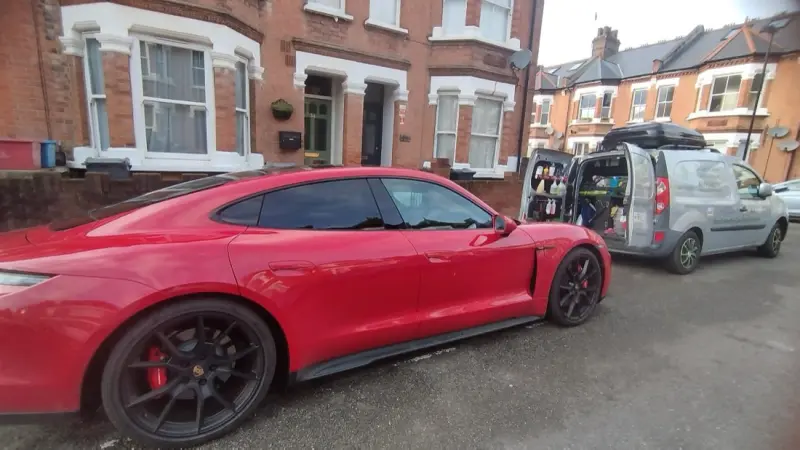
Respecting Originality
Care that honours original finishes
Older paint responds differently to modern cars. We assess every classic first, then choose the gentlest effective approach — traditional waxes where ceramics aren't suitable, and hand techniques over aggressive machine work.
- Period-correct, gentle cleaning products
- Single-stage machine polish only where safe
- Traditional waxes or suitable modern protection
- Delicate interior care for leather, wood & fabric
- Fully mobile at your home, garage or storage unit
What's Included
A gentle, thorough classic detail
Everything a treasured car needs — cleaned, refined and protected with methods chosen to suit its age and finish.
Exterior Care
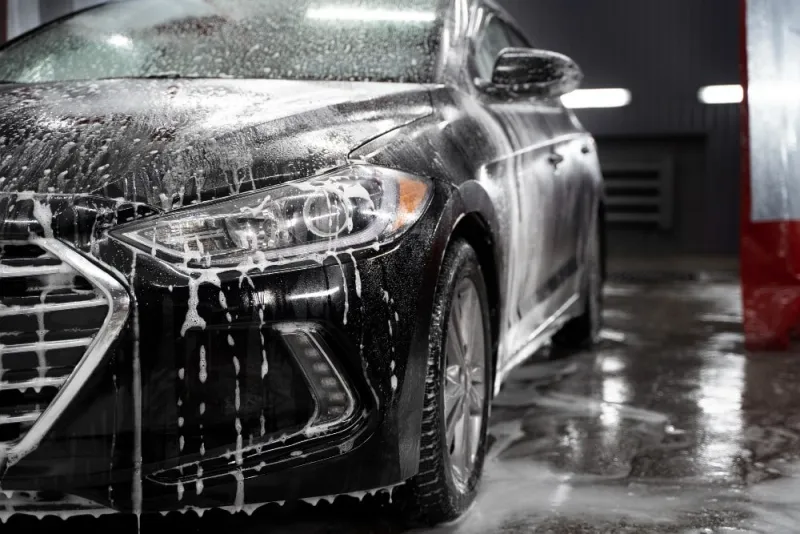
- Pre-wash and safe two-bucket hand wash using pH-neutral, wax-safe shampoo
- Tar, sap and fallout decontamination
- Gentle drying with microfibre towels and compressed air
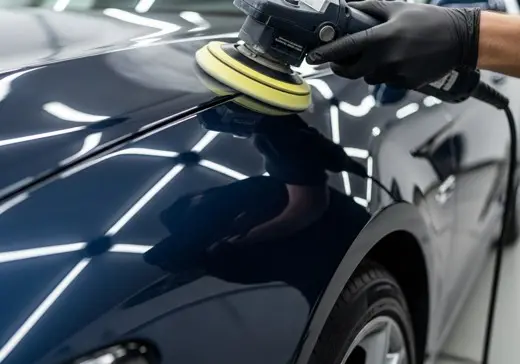
- Single-stage machine polish to refine paintwork and remove light swirls or oxidation
- Paint-safe polish and glaze applied to enhance depth and gloss
- Tyres, trims and brightwork cleaned and dressed
- Exterior chrome or aluminium polished where applicable
- Glass cleaned and polished
Interior Detailing
- Full vacuum of cabin, carpets and boot
- Dashboard, vents and trim cleaned with period-correct products
- Leather cleaned and conditioned, or fabric shampooed, to suit the interior
- Stain treatment where appropriate
- Interior glass cleaned and demisted
- Odour neutralisation if required
Optional Upgrades
- Engine bay detailing
- Paint protection — wax, sealant or a finish-safe ceramic
- Convertible roof cleaning and protection
Fully Insured & DBS-Checked Eco-Friendly Products Fully Mobile — We Come to You 5.0 from 560+ Reviews
The Key Difference
Single-stage paint changes everything
Almost every car built before the mid 1980s wears single-stage paint. The colour and the gloss are the same layer, with no clear coat over the top. A modern car has a sacrificial clear layer you can polish into. A classic does not, so every pass of a machine removes colour.
- Oxidation looks chalky rather than swirled. The surface dries out and goes flat, and colour lifts off onto the pad. Seeing red or blue on a white pad is normal on single-stage paint and is a signal to stop and reassess.
- We take paint depth readings first. Original paint on a fifty year old car may be a fraction of factory thickness, especially on edges, swage lines and around badges.
- We start with the least aggressive option that works. Often a hand-applied cleaner polish achieves what a machine would risk.
- Some cars should not be corrected at all. If the paint is thin or the car carries documented original finish, protecting what is there is worth more than a flawless shine.
If your car has been resprayed at some point, that changes the approach again, and we will check panel by panel rather than assume.
Brightwork
Chrome, stainless and aluminium trim
Original brightwork is expensive and often irreplaceable, so the safest approach is the gentlest one that gets a result.
- Non-abrasive metal polish, applied by hand in small sections and buffed off before it dries.
- Pitting cannot be polished out. Where the plating has broken through, polishing harder only removes more chrome. That is a replating job and we will say so.
- Aluminium and stainless behave differently from chrome and each takes its own product.
- A sealant goes on afterwards. Moisture sitting on bare brightwork is what causes pitting in the first place.
Inside
Leather, wood and headlining in an older cabin
Classic interiors use materials that modern products are not designed for.
- Older leather is usually uncoated. It absorbs whatever it is given, so cleaning is minimal and conditioning matters more than scrubbing.
- Wood veneer is lacquered, and the lacquer is the fragile part. Solvent-based cleaners will cloud it permanently.
- Headlining glue fails with heat and moisture. This is the single most common way a well-meant interior clean ruins a classic. We do not steam a headlining.
- Bakelite, painted metal dashboards and early plastics all mark easily and are cleaned dry wherever possible.
Our Limits
What we will not do to a classic
Being clear about this is more useful than a list of promises.
- No pressure washing. Older window rubbers, door seals and boot seals are not watertight in the way modern ones are, and forced water finds its way in.
- No steam near headlining, electrics or old trim adhesive.
- No aggressive compounding on thin original paint.
- No automatic anything. Everything is done by hand or with a machine under close control.
- If the right answer is to leave something alone, that is what we will recommend.
Occasions
Before a show, and before storage
Two moments in a classic owner’s year are worth booking properly for.
- 1A pre-show detail
Done close to the event so the car arrives at its best. Wheels, arches, engine bay, glass and brightwork all get attention, not just the paint.
- 2Storage preparation
The car goes away clean and completely dry, with a protective layer on the paint and brightwork. Dirt left on paint over winter etches into it.
- 3A breathable cover, never plastic sheeting
Plastic traps moisture against the panels and does more harm than no cover at all.
- 4A spring recommission
Removing dust, checking for any damp or mould in the cabin and re-protecting before the car goes back on the road.
FAQs
Frequently asked questions
Is this safe for older vehicles?
Yes — we use period-correct, gentle cleaning products and safe techniques suited to vintage and delicate finishes.
Can you detail soft-top roofs?
Absolutely — we can clean and protect convertible and soft-top roofs as an optional extra.
Do you use ceramic coatings on classic cars?
Only where suitable. Some older paints respond better to traditional waxes, and we'll always advise the safest option for your car.
Is machine polishing safe on a classic car?
It can be, but only after checking. We take paint depth readings first, because original paint on an older car is often far thinner than factory specification, particularly on edges and swage lines. Where the readings are low we work by hand instead. On some cars the right answer is to protect the paint rather than correct it.
What is single-stage paint and why does it matter?
Single-stage paint combines the colour and the gloss in one layer, with no clear coat over the top. It is what almost every pre-1980s car wears. Because there is no sacrificial clear layer, every polishing pass removes actual colour, so the approach has to be far more cautious than on a modern car.
Can you detail a car that has original patina?
Yes, and we will not remove it unless you ask us to. Patina adds value on many cars and cannot be put back once it has been polished away. We clean, decontaminate and protect the surface as it is, which stops further deterioration without changing the character of the car.
Do you use a pressure washer on classic cars?
No. Older door, window and boot seals are not designed for pressurised water and it finds its way into sills, footwells and door cavities where it sits and causes corrosion. We use low pressure rinsing and hand washing throughout.
How do you clean chrome without scratching it?
With a non-abrasive metal polish applied by hand in small sections and buffed off before it dries, followed by a sealant to keep moisture off. Where the chrome has pitted, the plating has already broken through and no amount of polishing will bring it back, so we will tell you if replating is the honest answer.
Can you detail my car before a show?
Yes, and it is worth booking close to the date so the car arrives at its best. A pre-show detail covers the areas judges and onlookers actually look at, including wheels and arches, glass, brightwork, shuts and the engine bay, not just the visible paint.
How should I prepare a classic for winter storage?
Put it away clean and completely dry, with protection on the paint and brightwork, because dirt left on paint over months will etch into it. Use a breathable cover rather than plastic sheeting, which traps moisture against the panels and causes more damage than leaving the car uncovered.
How often should a classic car be detailed?
It depends far more on use and storage than on mileage. A car kept in a dry garage and driven on dry days may need a full detail once a year with maintenance washes between. A car that is used year round, or stored somewhere damp, benefits from attention twice a year, particularly before and after winter.
Explore More
Other services
Ready When You Are
Bring your classic back to its best
Send a few photos of your classic for a free, tailored quote. Fully mobile across West London, 7 days a week.